
Crowns & Bridges in Innisfil, ON
When a Tooth Needs More Than a Filling
Some teeth reach a point where a filling isn't enough. A tooth that's cracked, broken down, or heavily decayed needs something that covers and protects the entire structure. A missing tooth leaves a gap that puts surrounding teeth, your bite, and your jaw under stress over time.
Crowns and bridges address both situations by restoring function, protecting what remains, and giving you a result that looks and feels natural.

A Plan That Makes Sense for Your Situation
Before anything is recommended, Dr. Gill examines the tooth, reviews your X-rays, and explains exactly what's happening and why a crown or bridge is the right approach. Before any decisions are made, you'll understand what the treatment involves, what it costs, and what happens if you wait.
Precision from the Start
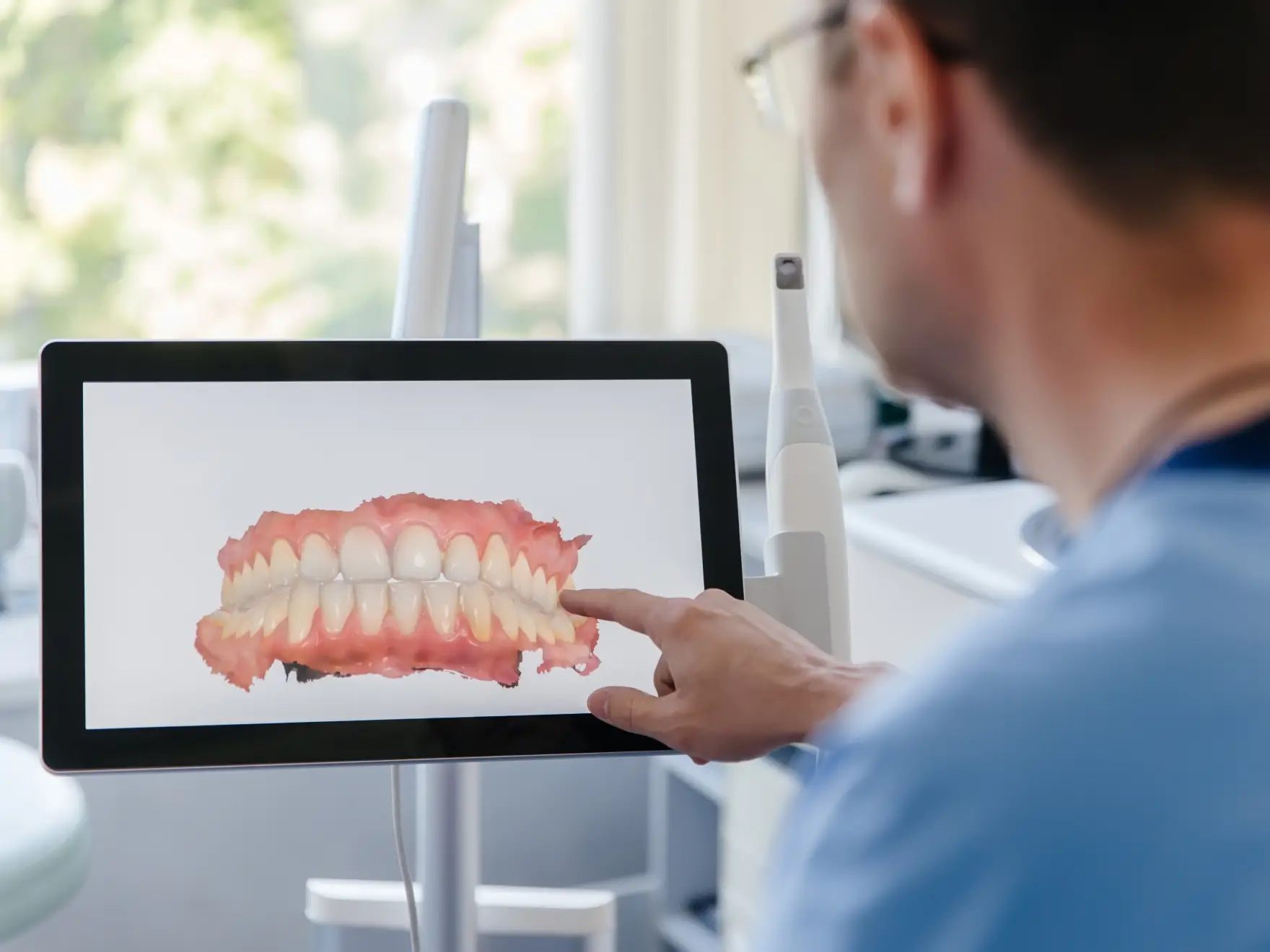
We use digital impressions instead of traditional putty moulds. Your crown or bridge is designed from an accurate 3D scan of your teeth, which means a better fit, less chair time for adjustments, and a result that feels right from day one.

Results Built to Last
Crowns and bridges are designed to handle the daily demands of chewing, speaking, and biting. When they're placed on a healthy foundation with a proper fit, they're a long-term solution for a more comfortable, functional mouth.
Find Out What Your Plan Covers

What We're Treating
Crowns and bridges address a range of situations where a tooth has been damaged beyond what a filling can fix, or where a missing tooth is affecting how the rest of your mouth functions. Dr. Gill will assess your specific situation and explain which option makes the most sense before any treatment is planned.
- A tooth that's cracked, fractured, or broken down by decay
- A tooth that's been treated with a root canal and needs protection
- One or more missing teeth that are affecting your bite or shifting surrounding teeth
- A tooth that's been worn down to the point where its structure is compromised

What Happens if You Wait
A damaged or missing tooth doesn't stabilize on its own. Here's what tends to happen when treatment is delayed:
- A crack extends further with every chewing motion, eventually reaching the root
- Bacteria enter the damaged tooth, turning a straightforward crown into a root canal or extraction
- Teeth on either side of a gap drift into the empty space, affecting your bite and increasing your risk of decay in those areas
- The tooth above or below a gap loses its biting surface and begins to drift as well
- Bone in the area of a missing tooth begins to deteriorate over time, limiting your options for replacement later
Addressing either situation sooner keeps your options open and your treatment simpler.


What the Treatment Process Looks Like
Getting a crown or bridge typically takes two appointments. Here's what happens at each one.
Your First Appointment
- Dr. Gill prepares the tooth by reshaping it to accommodate the crown
- We take a digital scan using our 3D impression system, replacing the traditional putty mould entirely
- A temporary crown is placed to protect the tooth while your permanent restoration is being made
Your Second Appointment
- We remove the temporary and place the finished crown or bridge
- Dr. Gill checks the fit, the bite, and the appearance before cementing it in place
- Most patients leave feeling completely comfortable
What You Can Expect From Day One
More Time at Your First Visit
Clear Insurance & Costs
A Strong Foundation First
Honest About What Can Wait
Frequently Asked Questions
What if I had a crown placed somewhere else and I'm not happy with how it fits or looks?
Bring it up at your appointment. An ill-fitting crown that's causing discomfort, affecting your bite, or trapping food can be assessed and replaced. We'll take a look, explain what we think is causing the issue, and discuss your options from there.
Is there anything I can do to make my crown last longer?
Yes. Beyond brushing and flossing consistently, the biggest factors are avoiding habits that put excessive force on your teeth: grinding, chewing ice, or using your teeth to open packaging. If you grind at night, a night guard significantly reduces the wear on both your crowns and your natural teeth. We can discuss that option at any checkup.
How do I know when a crown needs to be replaced?
We assess your crowns at every checkup. Signs that a crown may need replacing include visible wear or chipping, sensitivity that wasn't there before, a change in how your bite feels, or decay developing at the margin. Some crowns last fifteen years or more. Others may need attention sooner depending on where they're placed and how much stress they're under.
If I'm missing more than one tooth in a row, can a bridge still work?
It depends on how many teeth are missing and the condition of the surrounding teeth. A bridge spanning a single missing tooth is straightforward. Replacing two or more consecutive teeth with a bridge is possible but puts more load on the abutment teeth. In those cases, implants may provide a more stable long-term solution. We'll walk you through both options and help you decide what makes the most sense for your situation.
What does a crown feel like once it's in place?
Most patients don't notice their crown at all within a few days of placement. Initially you might be aware of it, particularly when biting. Some sensitivity to temperature is normal in the first week or two as the tooth settles. If your bite feels uneven or the sensitivity doesn't resolve, let us know and we'll adjust the fit.
Can a crown get a cavity?
The crown itself can't decay, but the natural tooth underneath it can. Decay most commonly develops at the margin where the crown meets the gumline if plaque is allowed to build up there. This is why flossing around a crown and keeping up with regular cleanings matter just as much after the crown is placed as they did before.
How is a bridge attached and what does it do to the teeth on either side?
A bridge is anchored to the teeth adjacent to the gap, called abutment teeth. Those teeth are reshaped and fitted with crowns that support the artificial tooth in the middle. This is a permanent, fixed restoration, but it does mean that otherwise healthy teeth need to be modified to support the bridge. It's one of the reasons we sometimes discuss implants as an alternative when the surrounding teeth are in good condition.
What's a temporary crown made of and how careful do I need to be with it?
Temporary crowns are made from an acrylic material and held in place with a softer cement so they can be removed easily at your second appointment. They're functional but not as strong as your permanent crown. While you're wearing one, we recommend avoiding sticky foods like caramel or gum, chewing on the opposite side where possible, and being gentle when flossing around it.
My tooth doesn't hurt. Why would I need a crown?
Pain is a late signal. By the time a damaged tooth hurts, bacteria have usually reached the inner tissue and the situation is more complex to treat. A tooth can be significantly cracked or decayed without producing any discomfort at all, which is exactly why we assess structural integrity rather than relying on symptoms to guide treatment.
Is it possible to save a cracked tooth with a crown, or does it need to come out?
It depends on how far the crack extends. If the crack stops above the gumline and hasn't reached the root, a crown can hold the tooth together and protect it from further damage. If the crack runs below the gumline or splits the root, extraction may be the only option. The sooner we see it, the better your chances of saving the tooth.
Find Us in Innisfil
1015 Innisfil Beach Road Units C and D Innisfil, ON L9S 1T3Innisfil Dental is located on Innisfil Beach Road to serve patients and families who want a dentist close to home. Quality care and a shorter drive should not be mutually exclusive.
Convenient on-site parking available.