
Dental Implants & Dentures in Innisfil, ON
Not Sure If Implants Are Right for You?
Take our two-minute quiz to find out if you're a candidate for dental implant treatment and take the first step toward a tooth that looks, feels, and functions like the real thing.

Find Out What Your Plan Covers

Understanding Dental Implants
A dental implant replaces a missing tooth from the root up. A small titanium post is placed into the jawbone, where it integrates with the bone over a few months. Once it's fully stable, Dr. Gill restores it with a custom crown that looks and functions like a natural tooth.
Beyond restoring the tooth itself, implants do something no other replacement option can:
- They preserve the jawbone by stimulating it the way a natural root does
- They prevent the bone loss that begins when a tooth root is gone
- They maintain the structure of your jaw and face over the long term
- They stand independently, without affecting the teeth around them

Understanding Dentures
Dentures replace multiple missing teeth using a custom-fitted, removable appliance that sits over the gum tissue. There are two types:
- Partial dentures replace several missing teeth while working around your remaining natural teeth
- Full dentures replace an entire arch when all or most of the natural teeth are gone
Both are custom-made to fit your mouth and adjusted over time as your gum tissue changes. Modern dentures are more comfortable and natural-looking than what most patients imagine when they hear the word.
Understanding Implant-Supported Dentures
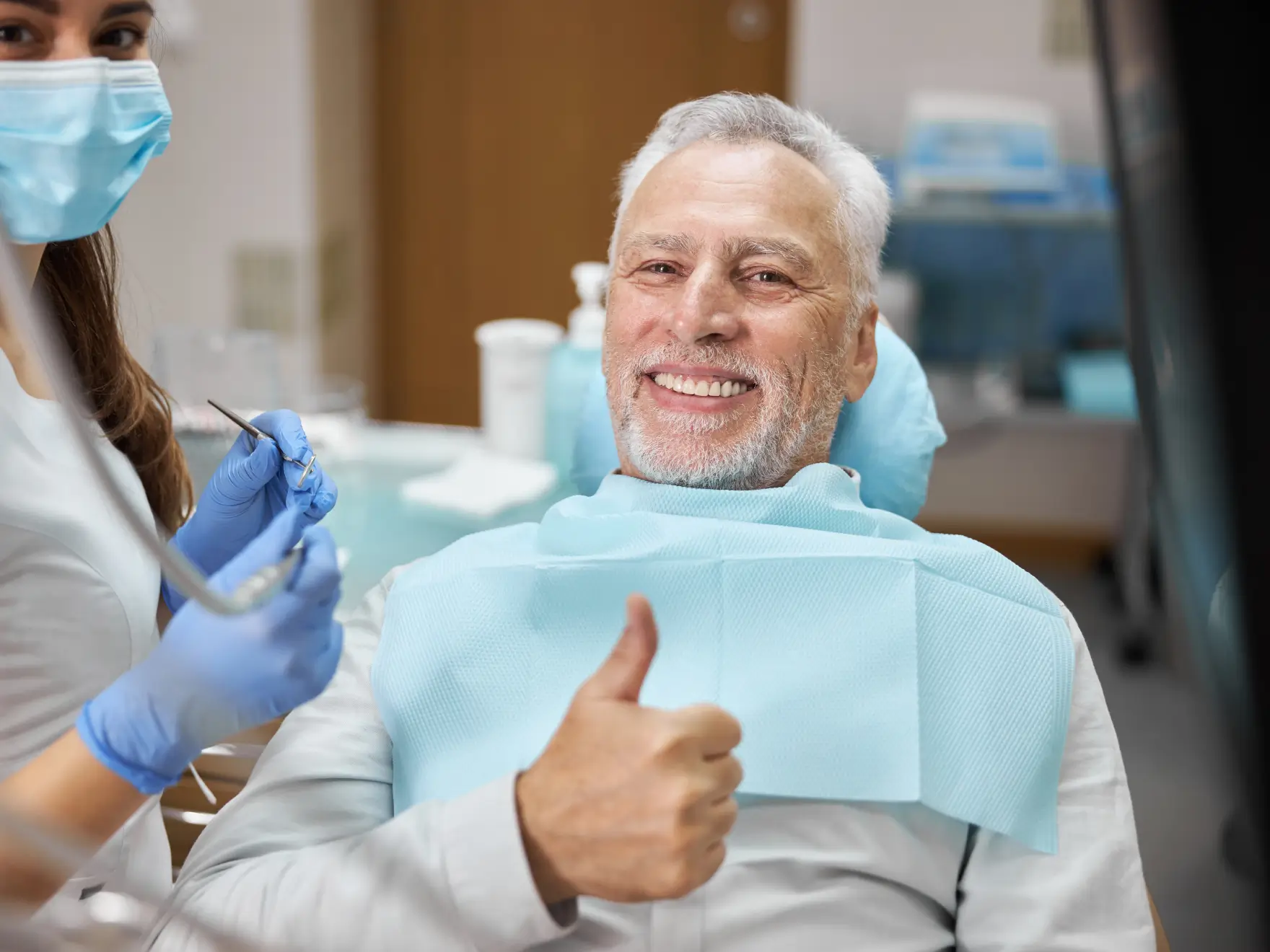
Implant-supported dentures combine the stability of implants with the practicality of a prosthetic arch. Instead of replacing every tooth with an individual implant, a small number of strategically placed implants anchor the denture securely in place.
This option is worth considering if you're replacing a full arch and want:
- A denture that doesn't shift or move when you eat or speak
- More confidence in daily activities without worrying about fit
- A more stable long-term result than a traditional removable denture

What to Expect When You Get Dentures
Consultation and Records
Dr. Gill assesses your gum tissue, your remaining teeth, and your bite. We take impressions and measurements to design dentures that fit your mouth accurately.
Fitting Appointments
Dentures are fabricated and fitted over a series of appointments. We check the fit, your bite, and your comfort at each stage and make adjustments before finalizing the appliance.
Delivery and Adjustment Period
Your finished dentures are delivered, and we walk you through how to wear, clean, and care for them. An adjustment period is normal. Most patients adapt within a few weeks. We're available if anything needs to be refined during that time.
Ongoing Monitoring
Gum tissue changes over time, particularly after tooth loss. We assess the fit of your dentures at regular checkups and reline or adjust them as needed to keep them comfortable and functional.
What to Expect During the Dental Implant Process
Consultation and Assessment
Dr. Gill reviews your oral health and bone structure to confirm you're a candidate for implants. If bone density is a concern, we'll discuss whether bone grafting is needed before proceeding.
Referral for Surgical Placement
We refer you to our trusted oral surgery partner for the placement of the implant post. They handle the surgical side of treatment in a setting designed for that procedure.
Healing and Integration
The implant post fuses with the jawbone over a period of several months. This process, called osseointegration, is what gives the implant its stability and strength.
Restoration at Innisfil Dental
Once bone fusion is confirmed, you return to our office. Dr. Gill takes a digital scan and designs a custom crown to fit the implant precisely. When the crown is ready, it's attached to the implant and your tooth is fully restored.
What You Can Expect From Day One
More Time at Your First Visit
Clear Insurance & Costs
A Strong Foundation First
Honest About What Can Wait
Frequently Asked Questions
Can I eat normally with implants or dentures?
With implants, yes. Once the restoration is complete, you can eat the same foods you would with natural teeth. With traditional dentures, there are some limitations. Harder or stickier foods can be more challenging, particularly while you're adjusting to wearing them. Implant-supported dentures offer significantly more stability and fewer food restrictions than removable dentures.
How long do implants last compared to dentures?
Implants are designed to be a permanent solution. With proper care and regular monitoring, they can last decades, sometimes a lifetime. Dentures typically need to be relined every few years as gum tissue changes, and replaced every seven to ten years. Implant-supported dentures offer a middle ground, combining the longevity of implants with the practicality of a prosthetic arch.
What's the difference between a partial denture and a dental bridge?
Both replace missing teeth, but they work differently. A partial denture is removable and clips onto remaining teeth. A bridge is fixed in place and requires the adjacent teeth to be reshaped to support it. Which option makes more sense depends on how many teeth are missing, the condition of the surrounding teeth, and your preference for a removable versus fixed solution.
Can I sleep with my dentures in?
We generally recommend removing dentures at night. Taking them out gives your gum tissue a chance to rest and recover, and it helps extend the life of the appliance. We'll give you specific guidance based on your situation.
My dentures feel loose. Is that normal over time?
Yes, and it's common. After tooth loss, the jawbone gradually changes shape as it resorbs. Dentures that fit well initially can become looser as that process continues. Regular checkups allow us to monitor the fit and reline your dentures when needed to restore comfort and stability.
How do I clean and care for an implant crown?
Exactly the way you'd care for a natural tooth. Brush twice a day, floss daily around the implant, and keep up with regular cleanings. The crown itself can't decay, but the gum tissue and bone around the implant can be affected by plaque buildup, so consistent hygiene matters.
What if I don't have enough bone for an implant?
Bone loss in the area of a missing tooth is common, particularly if the tooth has been gone for a while. In some cases a bone graft can rebuild the necessary volume before implant placement. We'll assess your bone structure and discuss whether grafting is needed as part of your treatment plan.
Am I too old for dental implants?
Age alone isn't a disqualifying factor. What matters is your overall health, your bone density, and whether your gums and remaining teeth are in good condition. We assess each patient individually. Many patients in their seventies and beyond are excellent implant candidates.
Why do implants take so long from start to finish?
The timeline is driven by biology. After the implant post is placed, the bone needs time to grow around it and integrate with the titanium surface. Rushing that process would compromise the stability of the implant. The wait is what makes the result reliable and long-lasting.
I've heard implants are painful. What's the recovery actually like?
The surgical placement is done under local anesthetic, so you won't feel pain during the procedure. Afterward, most patients experience swelling and tenderness for a few days, manageable with over-the-counter pain relief and soft foods. Most people return to normal activity within a day or two. The recovery is typically more comfortable than patients expect.
Learn More About Dental Implants & Dentures
Find Us in Innisfil
1015 Innisfil Beach Road Units C and D Innisfil, ON L9S 1T3Innisfil Dental is located on Innisfil Beach Road to serve patients and families who want a dentist close to home. Quality care and a shorter drive should not be mutually exclusive.
Convenient on-site parking available.